
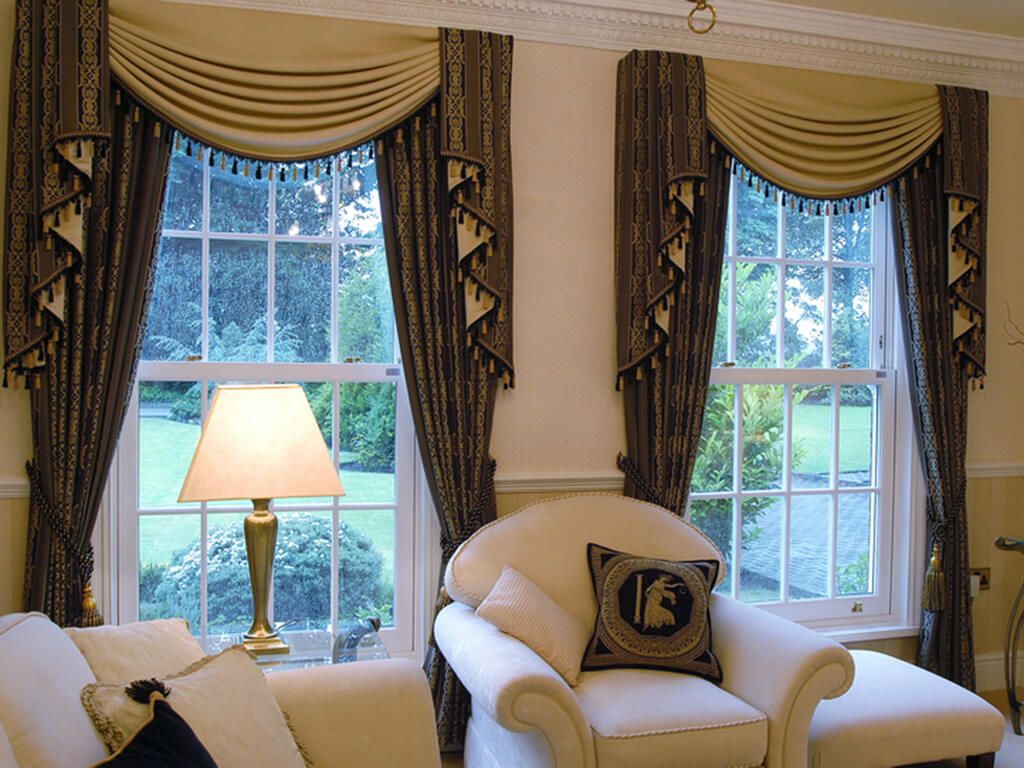
The sandstone house in Dumfries dated from 1867, and it had 21 single-glazed timber sash windows, many of them painted shut years before the new owners got the keys. They wanted warm rooms and windows that opened, but they were not willing to lose the look that made them buy the place. That is the brief behind most enquiries we get about uPVC sash windows in Scotland, and it is a fair one. A well-made vertical slider can keep the proportions, the horns and the sightlines of a period sash while doing away with the draughts, the rattles and the painting every few summers.
This guide walks through the job the way we would approach it, from deciding whether replacement is right to the day the fitters arrive. It is written for homeowners weighing it up and for the joiners and installers who will be asked to quote.
Step 1: Decide whether to repair or replace
Not every old sash needs to come out. If the timber is sound, the boxes are square and the client mainly wants to stop a rattle, repair and draught-proofing may be enough. Replacement starts to make sense when you see some of these:
- Soft or rotten timber in the bottom rails, sills or the box itself
- Sashes painted shut, or cords and weights that have failed more than once
- Condensation running down single glazing every winter morning
- Rooms that stay cold however high the heating is turned up
- A repaint due again, and the owner has had enough of it
Our post on when double glazing needs replacing covers the wider warning signs, and many of them apply just as much to old timber frames.
Step 2: Check what the building allows
Do this before anyone talks about colours. If the property is listed, or sits in a conservation area, the local council’s planning team may need to approve a change of window, and some will have firm views on materials. Ask them early and keep a note of what they say. It is far easier to adjust a specification on paper than to argue about frames that are already made.
Where uPVC is acceptable, the detail matters. Our Vintage range uses the patented Timberweld® jointing process, which recreates a traditional butt joint on the internal and external frame surfaces, so every edge of the frame is sealed. That joint blends in with Georgian and Victorian styles and can be suitable for conservation areas and contemporary developments. If the window is also a means of escape or sits on an upper floor, check the opening and safety requirements in the Scottish domestic technical handbook at the same time.
Step 3: Choose between Classic and Vintage
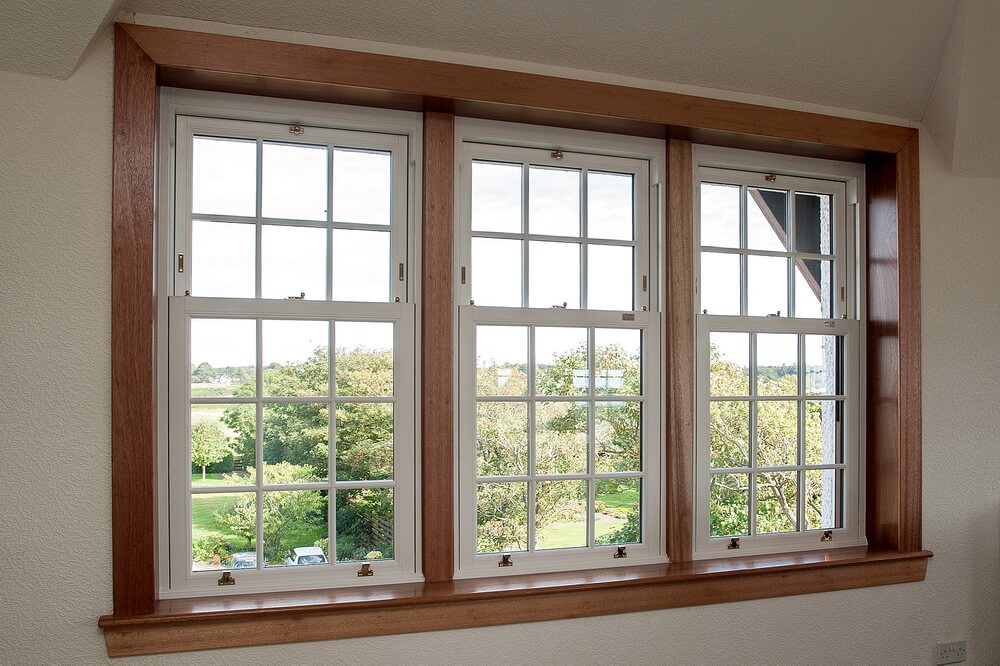
Scotia makes its vertical sliding sash in two ranges. Both are fully reinforced, both are WER “A” rated as standard, and both can take Georgian bars, continuous horns and arched heads. The difference is mainly how close to the original you want to get.
| Classic | Vintage | |
|---|---|---|
| Frame depth | 147mm | 133mm |
| Standard finish | Plain white, white wood grain foil option | White wood grain foil, antique cream wood grain option |
| Joints | Fusion welded | Timberweld® butt joint |
| Spring balances | Caldwell Ultralift, tested to 20,000 cycles (larger sashes upgrade to Torso) | Caldwell Torso, tested to 50,000 cycles |
| Secured by Design | Upgrade available | Standard |
| Energy rating | WER “A” as standard | WER “A” as standard |
As a rule of thumb, Classic suits a tidy upgrade on a later villa or a terrace where the owner wants clean white frames. Vintage is the one for a sandstone Victorian property where the painted-timber look is the whole point. Beyond the standard finishes there is a wide range of special wood grain foils and spray-painted RAL colours if the street calls for something other than white or cream.
Step 4: Survey every opening, not just one
Period houses are rarely square, and two windows that look identical from the garden can differ by a surprising amount. A proper survey measures each opening, checks the proportions of the meeting rail and the sash sizes, and looks at how the new frame will sit against the existing facings, shutters and sills inside.
In Dumfries, our surveyor measured all 21 windows, talked the owners through the internal finish around the woodwork and sills, and agreed the least disruptive way to fit them. On a villa in Cambuslang, the survey went further: the client wanted the tall, slim proportions of the original windows back after 1960s replacements had removed the stone mullions. The answer was made-to-measure replica sandstone mullions matched to the original width, height and colour, with new PVC-u windows between them. You can read how the Cambuslang villa was restored on our projects page.
Step 5: Get the details right on the order
For joiners and installers, this is where a sash job is won or lost. Before you sign off the order, confirm:
- Horns: plant-on (plain white Classic only) or continuous, and on which windows
- Georgian bars: internal or surface mounted, and the pattern for each elevation
- Finish inside and out, especially if the owner wants white inside and a foil outside
- Arched head frames, where the original openings have them
- Which windows need Secured by Design, if you are ordering Classic
- Any windows that must meet escape requirements
Trade customers can order the full range through our trade vertical slider windows line, made to measure at our Ayrshire factory. Developers matching a traditional streetscape can specify the same ranges as new build vertical sliders, and there is a commercial vertical slider range for larger refurbishment contracts.
Step 6: Plan the fitting days
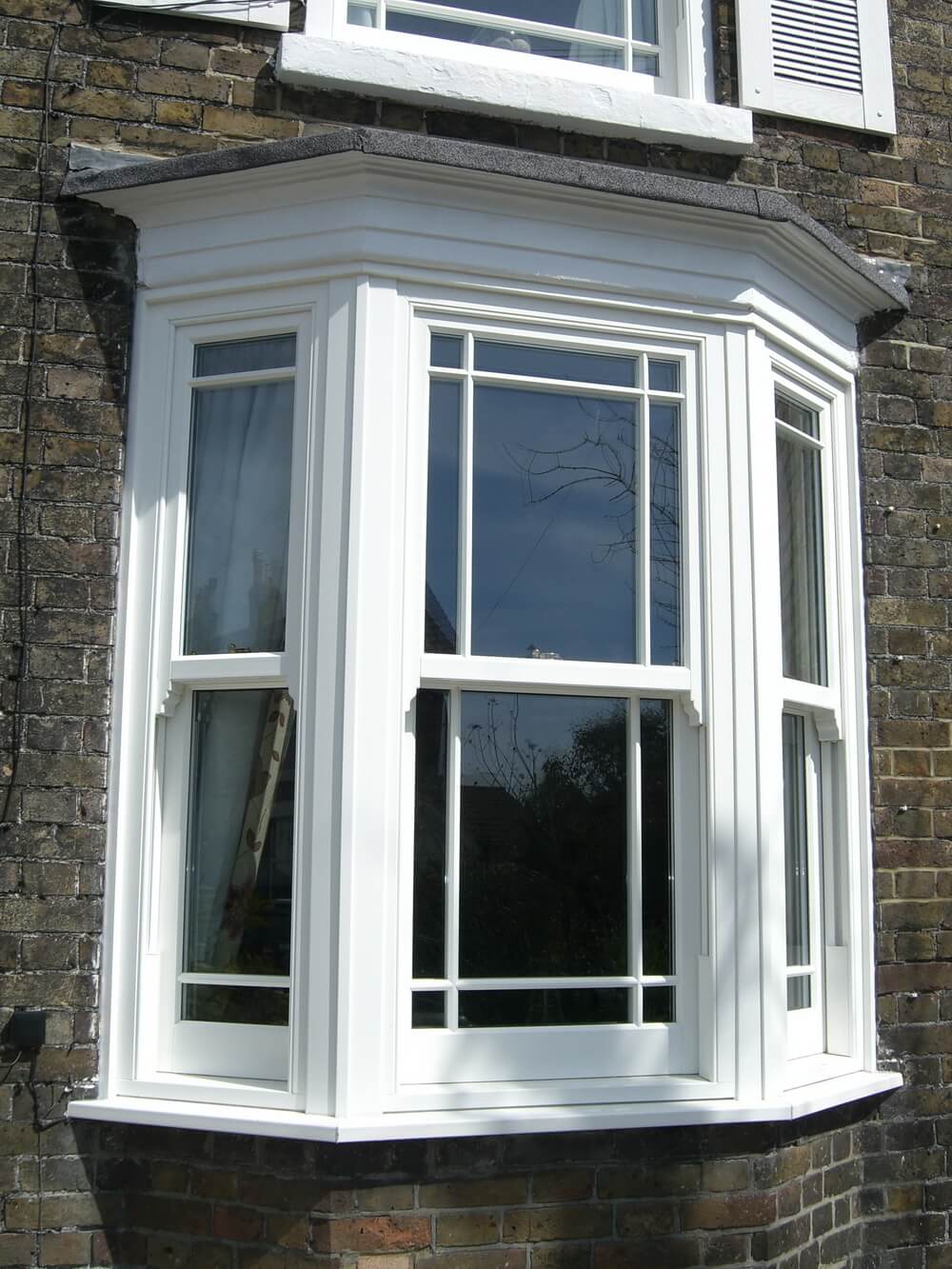
Replacing a house full of sashes is noisy, and the owner will be living around it. The Dumfries renovation had several trades on site, so the owners needed the windows in on a specific date. We sent two installation teams to keep it short, and the fitters explained in advance which windows would be replaced each day so furniture could be moved and covered. The job took the four days planned. That kind of day-by-day plan costs nothing and is what clients remember.
Afterwards, the balances and seals need very little attention. Our aftercare and inspection guides cover the simple checks that keep sliders running smoothly, and our explainer on window energy ratings sets out what that “A” rating means for the room. For the independent side of energy labels, see the British Fenestration Rating Council.
uPVC sash windows in Scotland that keep the character
The Dumfries owners said their new windows look like they have always been part of the house. That is the test for any sash replacement. If you are a joiner pricing a period job, our Trade Centre team in Kilmarnock can help with sizes, finishes and options before you quote. Homeowners and specifiers can see the full Dumfries sash window story, download our brochure, or get in touch with our team to talk through your windows.
Comments are closed.