
When you’re specifying windows and doors for a new home, a conversion or a development, security isn’t optional. Scottish building standards require doors and accessible windows to resist break-ins, and buyers, insurers and housing associations expect proof. Two names come up again and again: PAS 24 and Secured by Design. Here’s what PAS 24 windows and doors mean for projects in Scotland, how they relate to the standards, and what to check before you order.
What Scottish Building Standards Require
Standard 4.13 of the domestic technical handbook says doors and windows vulnerable to unlawful entry must be able to be secured to deter housebreaking. It covers:
- External doors to a dwelling or a common area
- Entrance doors to individual flats and maisonettes
- Doors between a dwelling and an attached garage or conservatory
- Ground-floor windows, and any others that are easy to reach from outside
The handbook doesn’t name one product. Instead it points to recognised security standards, with PAS 24 among the routes it lists, and asks for products that have been tested and certified.
What PAS 24 Tests on Windows and Doors
PAS 24 is a British Standards Institution specification that tests how well a complete window or door set resists a determined attack. It isn’t a test of the lock alone. The whole unit is assessed, including the frame, glazing, hinges, locking and how the glass is held in.
Testers try manual attacks such as levering, cutting and removing beads, and apply loads to the frame and leaf. A product passes only if it stays secure. The current version Scotia is certified to is PAS 24:2016, covered by a BSI Kitemark for enhanced security.
Doors and windows are tested as separate product types, so a certificate for a door doesn’t cover a window from the same supplier, and the reverse is also true. Each certificate also lists the exact configurations that passed.
Where Secured by Design Fits In
Secured by Design is the official police security initiative in the UK. Its Police Preferred Specification goes further than a one-off product test. A product only earns it when it has been tested to standards like PAS 24, made under a certified quality system, and checked through ongoing third-party audits.
For developers, Secured by Design can also apply to a whole development, covering layout, lighting and boundaries as well as doors and windows. Using SBD-approved products is one of the simplest ways to meet that part of the scheme.
Why It Matters on Site
- Building warrant sign-off. Certified products give verifiers clear evidence against standard 4.13.
- Housing association and social housing work. Many contracts specify Secured by Design as a minimum.
- Insurance. Insurers often ask for doors and windows that meet PAS 24, especially on ground floors.
- Buyer confidence. Homebuyers increasingly ask about security, and a recognised mark is easy to explain.
- Fewer call-backs. Products built to pass a full attack test tend to have better hardware and stronger frames.
What to Ask Your Supplier
Not every “secure” door or window has been tested. Before you order, ask for:
- The certificate or licence number for PAS 24 and for Secured by Design, and check it covers the exact product type you’re buying.
- Proof of the tested configuration. Changing the glazing, hardware or opening type can take a unit outside what was tested.
- The quality system. ISO 9001 certification shows the factory makes every unit to the same standard as the tested sample.
- Installation guidance. A certified door only performs if it’s fitted correctly, with the right fixings and packers.
It also pays to agree early who holds the paperwork. On a development with dozens of plots, having certificates matched to each house type before the warrant stage saves chasing documents when the verifier asks for them. If you’re also weighing up frame options, our guide to choosing the right frame material for trade and new-build projects covers how the choice affects performance on site.
How Scotia Meets the Standard
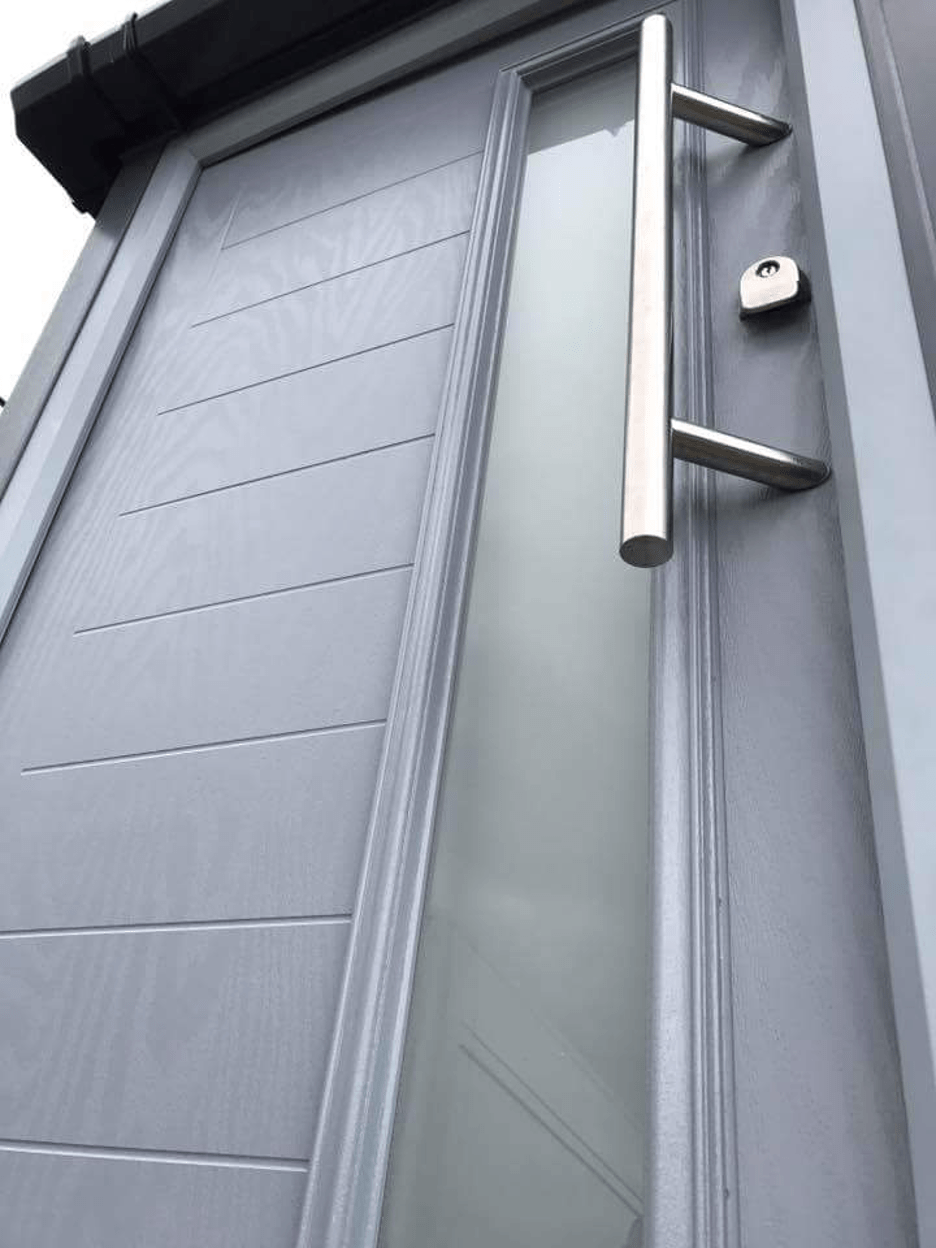
We manufacture in our own Ayrshire factories and hold BSI Kitemarks for BS 7412 and PAS 24:2016 enhanced security, alongside Secured by Design and ISO 9001 accreditation. Our composite doors use a 68mm door leaf with a 5-hook lock and can meet PAS 24:2016 and Secured by Design. Enhanced PAS 24:2016 and SBD security is also available on our uPVC doors, casement windows and tilt and turn windows.
Whether you’re a joiner ordering through our Trade Centres in Kilmarnock and Alva or a housebuilder planning a development with our New Build team, we can supply the certificates you need for each order. You can read more about specification choices in our post on commercial double glazing myths.
Frequently Asked Questions
Is PAS 24 a legal requirement in Scotland?
The building standards require doors and accessible windows to be secure, and PAS 24 is one recognised way to show that. It’s the route most builders and verifiers use.
Is Secured by Design the same as PAS 24?
No. PAS 24 is a test standard. Secured by Design is a police scheme that requires products to pass tests like PAS 24 and to be made and audited under a certified system.
Do replacement windows need to meet PAS 24?
Not always, but it’s good practice, and many insurers and landlords now ask for it.
Talk to Us About Your Next Project
If you’re specifying doors and windows for a project in Scotland and need security certification you can rely on, get in touch with our team or download our brochure.
Comments are closed.