
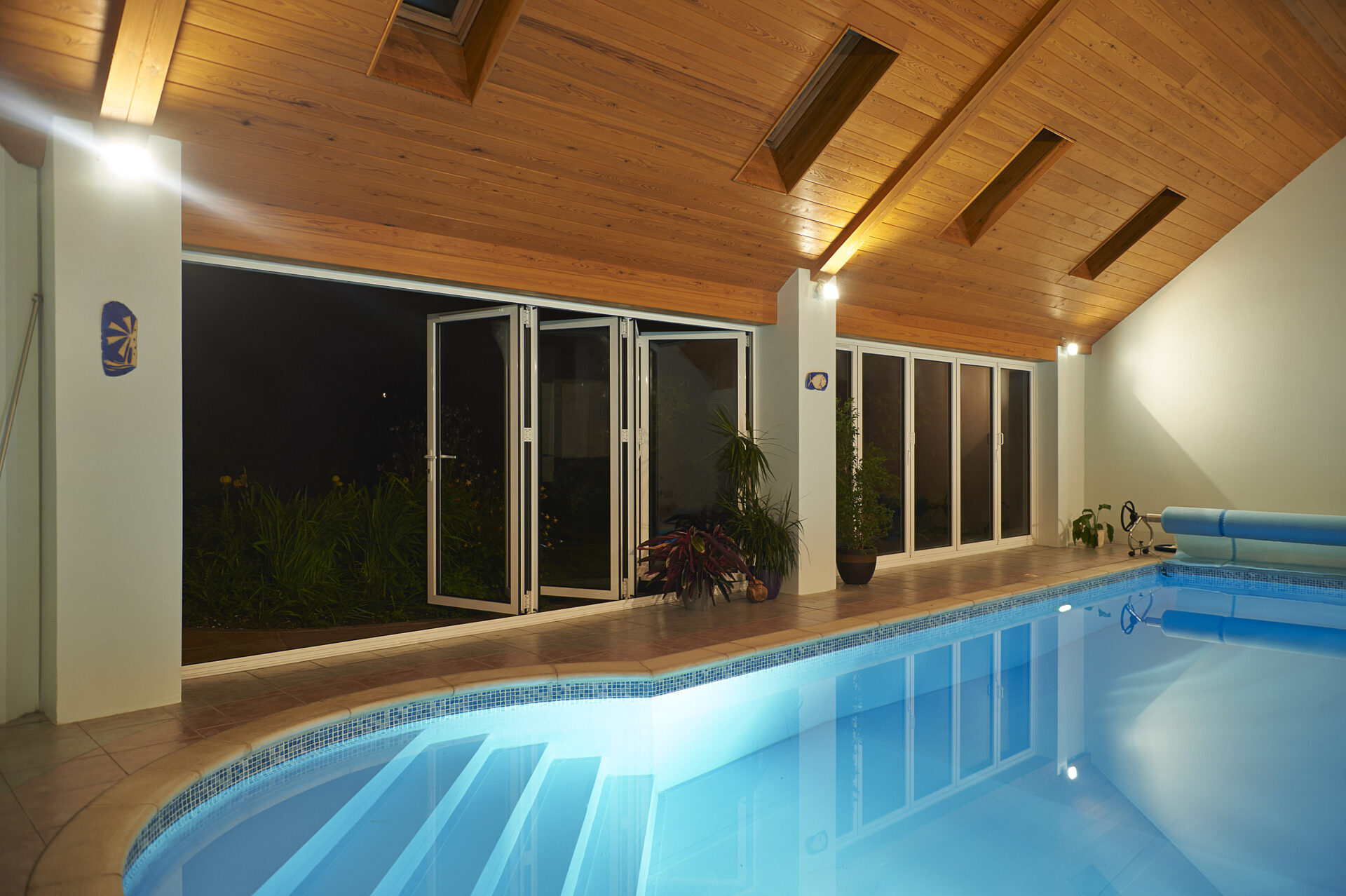
It usually starts with an extension. The walls are up, there’s a three or four metre opening at the back of the new kitchen, and somebody has to decide what goes in it. Bifold or sliding? Homeowners ask us that more than almost anything else, and so do the joiners fitting their extensions. The honest answer to bifold vs sliding doors is that it depends on how the room gets used for most of the year, not on the handful of warm weekends a Scottish summer hands out. Here are the five questions we’d ask before choosing, using the uPVC and aluminium doors we make in Ayrshire as the examples.
The difference in a nutshell
A bifold door is a run of narrow leaves hinged together. They fold back against each other, concertina-style, to one or both sides of the frame, so when it’s fully open almost the whole width is clear.
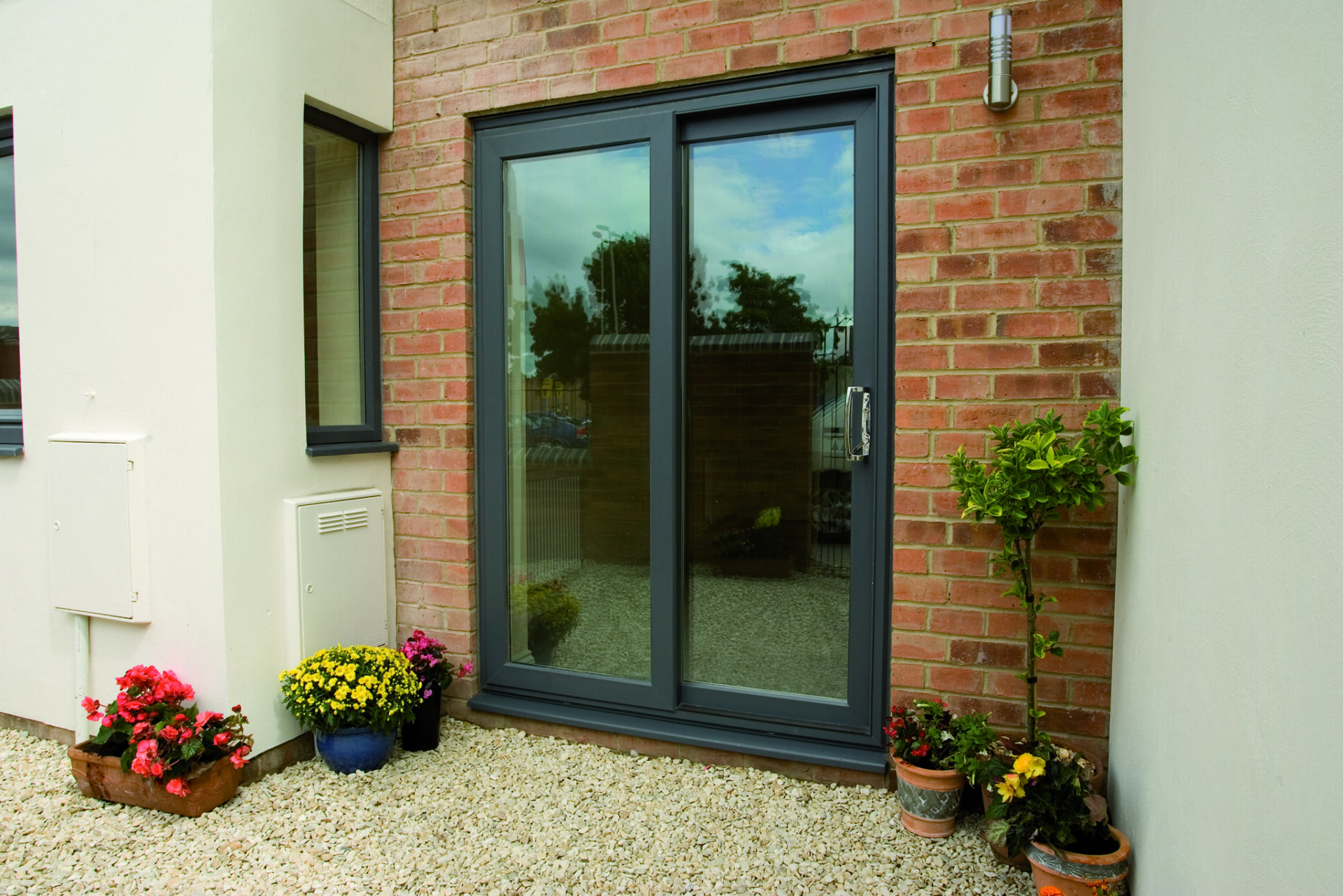
A sliding patio door uses bigger panes. One or more of them glides past a fixed pane (or past each other) on a track. You never get the full width open at once, but each pane is a large sheet of glass with very little frame in the way.
So the choice really comes down to a trade-off: the biggest possible opening against the biggest possible view.
1. Do you want the wall open, or the view?
Bifolds come into their own on the days they’re open. Our uPVC bifold doors can open up almost an entire wall, so the kitchen and the patio become one space for a barbecue or a family party.
Be realistic, though. Here in Scotland the doors will spend far more days shut than open, and when they’re shut you’re looking through them. With a bifold you see a vertical frame every metre or so where the leaves meet. A slider has far fewer, which is why aluminium sliding doors are making a comeback for rooms with a view worth framing. Ours are designed around minimal sightlines and can be made in widths up to 12m and heights up to 6m, depending on the system.
2. Where will the doors go when they’re open?
This is the question people forget to ask until the sofa arrives. When a bifold opens, the leaves stack at the end of the frame, and that stack has to sit somewhere. Our bifold sashes can fold inwards or outwards, so you can choose whether it takes up floor space in the room or space on the patio, but either way you need to keep that corner clear of furniture, planters and bins.
A sliding door stays inside its own frame. Nothing swings in or out, which makes it the easier choice for a narrow patio, a small kitchen, or a doorway onto a balcony. Our aluminium sliders can also be specified with a flush floor track, so there’s no step to trip over between the floor inside and the paving outside.
3. How will you use them every day?
Most of the time a back door is a back door: letting the dog out, nipping to the bins, hanging out a washing. Think about how that works with each option.
- Sliding: one hand, one pane, done. It’s the simplest daily operation there is.
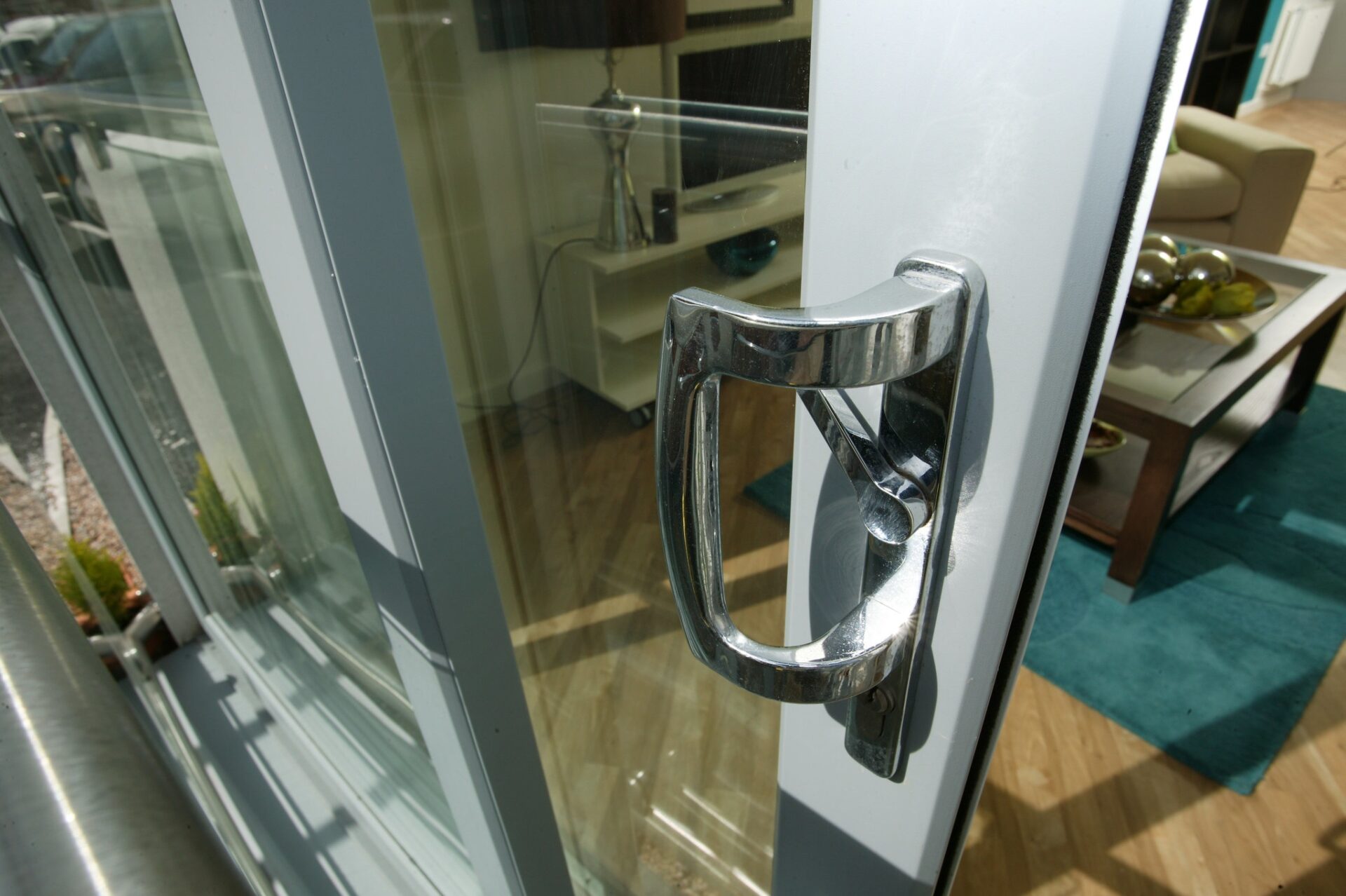
- Bifold: plan the configuration so one leaf works as an everyday door, then you only fold the whole set back when you want the full opening. Our uPVC bifold has a “D” handle on each leaf that makes it easy to open without knocking the leaf next to it, plus an anti-mishandling device that stops the shoot bolts being thrown while the door’s open and scoring your new floor.
If you’d like more detail on leaf numbers and opening layouts, our older guide on how to choose the right bifold door for your home walks through it.
4. How warm and how secure will they be?
Both types can be warm and secure if they’re made properly. What matters is the specification, so here’s what’s in ours.
Our uPVC bifold is made from 70mm impact-modified uPVC, internally beaded, with high-performance sealed units (1.2 W/m²K) and safety glass as standard, giving an overall U-value of 1.4 W/m²K. It carries BBA certification, PAS 24:2016 and Secured by Design.
Our uPVC sliding patio doors have full steel reinforcement in the frames, 28mm toughened low-E sealed units, a high-security multipoint mushroom lock, an anti-jack device and a clutch mechanism that locks the sliding pane into the fixed pane at the centre. Secured by Design certification is available on request.
When we replace a domestic door, it’s a Band A rated door as standard under the BFRC energy rating scheme. Whichever style you go for, ask your supplier for the energy rating and the security certificate for the exact configuration you’re buying, as changing the glass or hardware can take a door outside what was tested. Our accreditations page lists everything we hold, and Secured by Design explains what its police-backed standard covers.
5. uPVC or aluminium?
You can have either door type in either material, and the material often settles the question for you.
- uPVC suits most extensions and replacements. Our patio sliders come in 7 standard colours in 2, 3 or 4 pane layouts, with a 10-year guarantee against warping, discolouring and cracking. Our uPVC bifolds come in eight standard colours.
- Aluminium gives slimmer frames, bigger sizes and the full range of RAL and bespoke finishes, double or triple glazed. Our bifolds go up to 7m wide and 2.7m high; our aluminium sliders go much larger. Both are handled by Scotia Aluminium.
One housebuilder and contractor in Inverness, Mr P Williams, put it this way after switching to our aluminium bi-folding system: “As a house builder and contractor we have used many bi-folding doors systems over the years with varying levels of success. Since using the Scotia Aluminium Bi-Folding Doors system we can finally say we have found the right tool for the job.”
Our rule of thumb
Go bifold if you entertain outdoors, want the room to open right up in good weather, and have space for the folded stack. Go sliding if the view matters most, space is tight, or the doors will mostly stay closed. And if you’re also replacing the front door while the builders are in, our composite vs uPVC doors comparison covers that decision.
Get the right doors for the opening
Homeowners can contact our team to talk through sizes, colours and configurations, or download our brochure first. Joiners and builders fitting extensions can order uPVC bifolds and patio doors through our Trade Centre in Kilmarnock, and we’ll help you pick the right configuration for the opening before it’s made.
Comments are closed.