
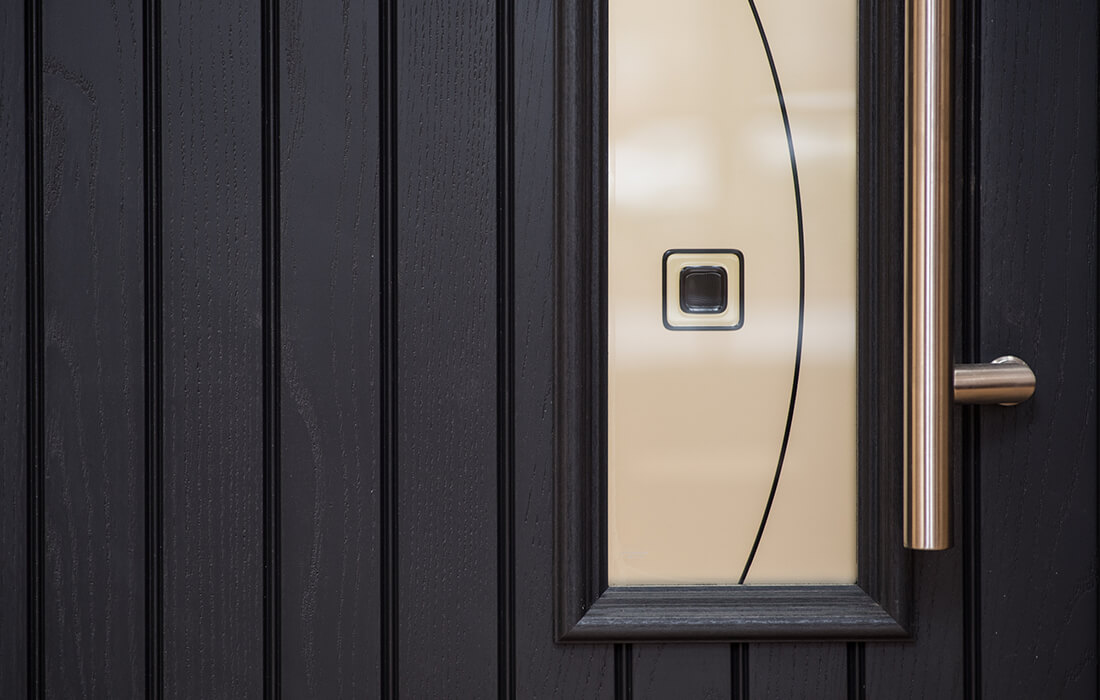
A joiner measuring up for a new front door gets asked the same thing on almost every job: “Should I go composite or uPVC?” Usually the homeowner has already half decided, based on something a neighbour said or an advert they saw. The honest answer to composite vs uPVC doors is that both can be excellent, both can be secure and warm, and the right one depends on the house, the opening and what the customer wants the door to do. We make both in our Ayrshire factory, so we have no reason to push one over the other. Here are the five things people most often get wrong, and what actually separates the two.
What’s Actually the Difference?
A uPVC door is built from the same kind of uPVC profile as a uPVC window. Ours use a 70mm frame depth in impact-modified uPVC, steel reinforced to the system company’s recommendations, with a panel or glazing set into the leaf.
A composite door combines materials. Our Xtreme doors have a high-density foam core inside a glass-reinforced plastic (GRP) skin, hung in a uPVC frame. Our Palladio door goes further, with a monocoque leaf 68mm thick. Most composite leaves on the market are around 44mm, so that’s a substantial difference in mass and stiffness.
Myth 1: “Only Composite Doors Are Really Secure”
Security comes from the whole door set being tested, not from the material alone. Our composite doors can meet PAS 24:2016 enhanced security and Secured by Design, with a 5-hook lock. But our uPVC doors are also available to PAS 24:2016 and Secured by Design, and they’re manufactured under our BSI Kitemark for BS 7412.
So the question to ask isn’t “composite or uPVC?” but “is this door set certified?” If a door needs to satisfy standard 4.13 of the Scottish building standards, a landlord or an insurer, specify PAS 24 on either type. Our guide to PAS 24 and Secured by Design explains what the tests cover, and you can see our certificates on the accreditations page.
Myth 2: “A uPVC Door Will Always Be Colder”
Both types are rated on the BFRC energy scale, from A (best) to G. When we replace a domestic door, it’s a Band A door as standard, whether it’s composite or uPVC.
Where composite does pull ahead is at the top end. The thick insulated leaf on our composite range reaches U-values as low as 0.85 W/m²K, and you can choose triple glazing in the door. For an exposed north-facing entrance, a property chasing a better EPC, or a customer who simply feels the cold, that extra performance is worth having.
Myth 3: “Composite Is Just a Fancy uPVC Door”
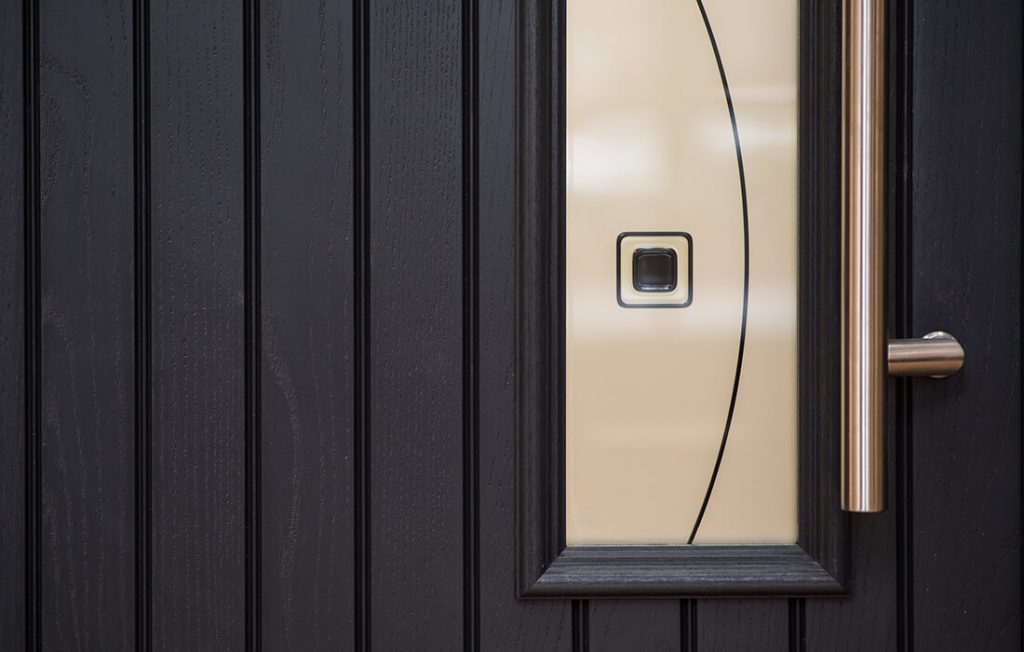
Not really. The way the leaf is built changes how the door looks, feels and lasts. Our composite door designs start from solid oak patterns, and a detailed mould carries the grain into the finish, so up close it reads as timber rather than plastic. The finish is hard-wearing and colourfast, and the doors are salt-spray tested, which matters on coastal jobs from Troon to the East Lothian coast.
Our composite 68mm leaf is double rebated with a seal on each side, inside a triple-seal frame, and it closes with the solid feel people associate with a timber door. There are 22 door styles, five hardware finishes and a 25-year hardware guarantee.
Myth 4: “uPVC Doors Are the Budget Option You Settle For”
There are plenty of jobs where uPVC is simply the better door. A few we see all the time:
- Matching the windows. A uPVC door in white, rosewood or cherry, or the two-tone rosewood/white and cherry/white, sits perfectly alongside uPVC windows in the same finish. Around 15 colour combinations are available to special order, from as few as two items.
- Bigger glazed entrances. Doors with side panels, fanlights or arched heads are straightforward in uPVC, glazed with 28mm sealed units in toughened safety glass, with laminated glass as an option.
- Outward opening. Our uPVC doors can be made inward or outward opening, useful where space inside the hall is tight.
- Easier access. A low aluminium threshold cuts the step at the door, which helps children, older relatives and anyone less mobile.
Add enhanced sound proofing, key or thumb-turn locking and a choice of handles and letter plates, and a uPVC door is a well-specified product in its own right. Our older post has more tips on choosing a uPVC front door.
Myth 5: “You Can’t Get Composite Through the Trade”
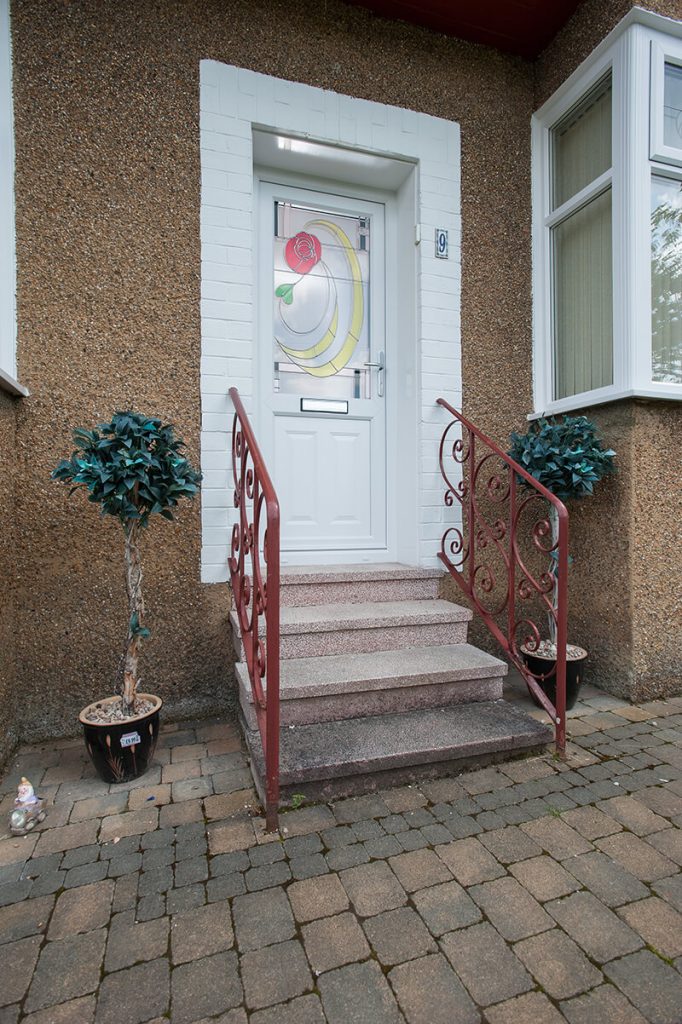
You can. Composite doors are part of our trade range alongside residential, patio, French and bifold doors, and every trade window and door is made in Kilmarnock with a lead time of three weeks from order. Collect from our Kilmarnock or Alva trade centres, or arrange site delivery for certain products within Ayrshire and the Central Belt. Trade windows and doors carry a ten-year guarantee against warping, cracking and discolouration.
Composite vs uPVC Doors at a Glance
| Composite (Scotia) | uPVC (Scotia) | |
|---|---|---|
| Leaf | Foam core with GRP skin; Palladio 68mm monocoque leaf | 70mm impact-modified uPVC frame, steel reinforced |
| Security | PAS 24:2016 and Secured by Design, 5-hook lock | PAS 24:2016 and Secured by Design available |
| Energy | U-values as low as 0.85 W/m²K, triple glazing option | BFRC Band A as standard on domestic replacements |
| Look | Woodgrain moulded from solid oak patterns, 22 styles | White, rosewood, cherry and two-tone, more to order |
| Best for | Front doors where looks, solidity and top insulation matter | Matching uPVC windows, wide glazed entrances, outward opening, low thresholds |
If you’re still torn, look at the opening first. A single front door on a period-style or new-build house usually suits composite. A wide entrance with side lights, a rear door matching uPVC casement windows, or an opening that needs a low threshold often suits uPVC better.
Get the Right Door for the Job
Installers and joiners can order through our Trade Centre, and the team will talk you through both ranges for your next job. Homeowners can browse every style in our brochure. Either way, get in touch and we’ll help you choose the door that suits the house, not the sales pitch.
Comments are closed.