

A window restrictor is a small piece of hardware with a big job. It lets a window open far enough to air a room, commonly around 100mm, and no further, so a small child can’t climb out or fall through the gap. Fitted well, window restrictors are one of the simplest safety decisions in a family home.
The catch is that the upstairs windows children use are often the same windows that have to work as a fire escape. Get the wrong restrictor on a bedroom window and you’ve swapped one risk for another. Below we go room by room through where restrictors earn their place, which window types make child safety easier, and what to ask for when you order.
What window restrictors should and shouldn’t do
A good restrictor holds the sash at a safe, narrow opening until an adult deliberately releases it. That release is the important part. On any window that serves as an escape route, the restrictor has to come off quickly from inside the room, without a tool and without a key that might be downstairs on a hook. A restrictor that needs a screwdriver to release has no place on a bedroom escape window.
Lockable handles raise the same question. They’re useful, but if the window is an escape route, the key needs to live in the room. We covered the escape side of this in detail in our post on fire escape windows and the Scottish building standards, and the short version is that child safety and escape aren’t in conflict as long as the release is easy for an adult.
A room-by-room guide
Children’s bedrooms and nurseries
This is where restrictors matter most, and where escape matters too. Choose a restrictor that an adult can release in a second or two, and check that the window still gives the full clear opening once it’s off. Then look at the furniture. A bed, toy box or chest of drawers under the window gives a child a step up, which undoes a lot of the good a restrictor does.
Landings and stairwells
Stair windows are easy to forget because nobody sleeps there, but they’re often low, large and above a long drop. They aren’t usually the escape route, so a lockable restrictor or handle can be a sensible choice. Where a sill is low, check what the domestic technical handbook asks for on protective barriers as well.
Loft conversions and dormers
Loft rooms combine the biggest drop in the house with windows that are often the main way out in a fire. Tilt and turn windows suit them well: the tilt position gives secure ventilation with only a narrow gap at the top of the sash, and turning the handle fully lets the whole sash open inward to clear the opening for escape.

Ground-floor rooms
Falls are less of a worry downstairs, but toddlers still wander out of open windows into gardens and driveways, and security matters more here than anywhere. Lockable venting handles let a window sit slightly open without being an open invitation. Our casement and tilt and turn ranges are available to PAS 24:2016 enhanced security and Secured by Design, with the certificates on our accreditations page.
Flats and high-rise homes
Several floors up, the biggest temptation is leaning out to clean the outside of the glass. Our new build fully reversible windows are designed to give a child safe method for easy cleaning and emergency escape, so both faces of the glass can be cleaned from inside the room.
Which window types make child safety easier?
Restrictors can go on most opening windows, but the way a window opens changes how much work the restrictor has to do. Here’s how our main uPVC ranges compare.
| Window type | How it opens | Child safety | Escape |
|---|---|---|---|
| Casement | Sash opens outward on hinges | Restrictor on the sash; lockable venting handles on our new build range | Easy Escape egress hinges available as an option |
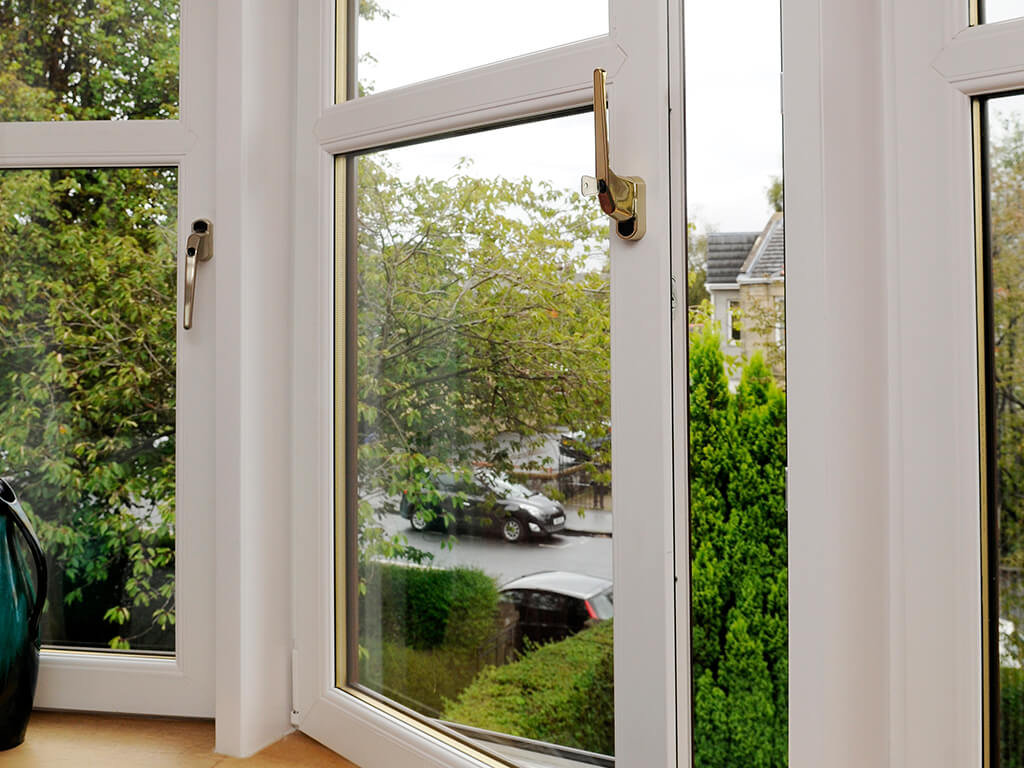
| Tilt and turn | Tilts inward at the top, or turns inward like a door | Tilt position ventilates with a narrow gap; optional safety features for children and elderly | Turn position clears the whole opening |
| Fully reversible | Sash rotates so both sides face the room | Designed for safe cleaning from inside | Easy exit emergency escape |
If you’re torn between the first two, our comparison of tilt and turn vs casement windows goes into ventilation, cleaning and room layout in more depth.
For housebuilders: settle it at specification stage
On a development aimed at families, restrictors are an easy win, but only if they’re decided before manufacture. Retro-fitting after handover means extra visits, mismatched hardware and snagging you didn’t need. Work through each house type, mark which windows are escape windows, agree the restrictor and handle for each one, and put a line in the handover pack showing buyers how to release them.
Our New Build team can work through the window schedule with you plot by plot, and our new build tilt and turn windows are a popular choice for upper floors where you want ventilation, escape and child safety from one product.
Window restrictors checklist
- List every upstairs room a child will sleep or play in.
- Mark which of those windows are escape windows.
- On escape windows, choose restrictors that release from inside without a tool or key.
- If handles lock, keep the key in the room, out of a child’s reach.
- Move beds and furniture away from windows where you can.
- Show every adult in the house how the restrictors release.
- Check restrictors and hinges each year as part of your routine window care.
Restrictors only work if they’re on the right windows and everyone knows how they open. If you’re replacing windows in a family home, talk to our team about the safety options for each range, or download our brochure. Joiners can order through our Trade Centre in Kilmarnock, and housebuilders can plan restrictors across a whole site with our New Build team.
Comments are closed.